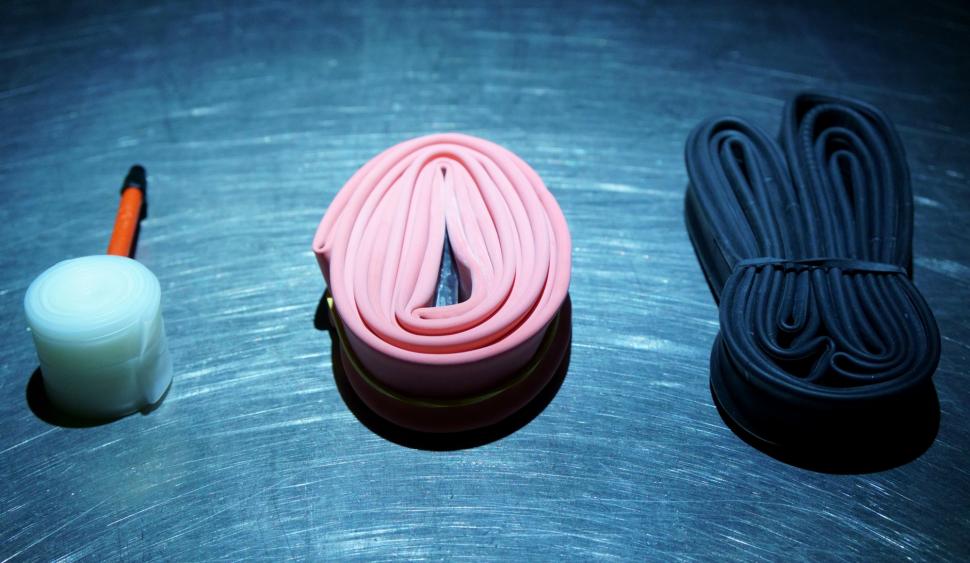
If you take away the tubeless tyres (which many riders now prefer) or tubular tyre options, neither of which require an innertube, we are left with a normal clincher tyre with an innertube as the option to keep your tyres inflated and wheels rolling smoothly. However there are many different types of innertube, different sizes, different valves and innertubes made with different materials.
Once you have the correct size tube and the correct valve type you then have 3 material options, Butyl, TPU & Latex.
Butyl Innertubes
Butyl rubber tubes have been around a long time and are the most common. They are the most affordable and easiest to repair using a standard puncture repair kit, giving you more life out of it than other materials. Some manufacturers sell lighter-weight butyl tubes with thinner walls alongside their standard range if you want to save a few grams.
Latex Innertubes
If you are looking for an even lighter tube than the light weight butyl, latex tubes are significantly lighter and there is also the benefit of less friction against the tyre, resulting in lower rolling resistance.
However there are a number of downsides to latex tubes, they are more fragile and more awkward to fit as they’re floppier than butyl tubes. Plus if you have carbon rims on a bike with rim brakes, you also need to be careful not to drag your brakes on long descents because overheating can cause latex tubes to fail.
Another drawback of latex tubes is that they leak air more quickly, so you may need to pump them up before every ride. If you do get a flat, they’re difficult to repair too and you need a different type of repair kit. In summary latex tubes dont have a lot going for them!
TPU Tubes
Thermoplastic Polyurethane (TPU) tubes have become more popular in recent years thanks to their light weight and small pack size. TPU has characteristics similar to rubber and plastic, and is said to have the least rolling resistance compared to butyl and latex tubes.
Tubolito are lighter, stronger offering more puncture protection and are more compact than a standard butyl tube, and more robust than latex. Of course they are more expensive than a butyl tube but there are clear benefits to a TPU tube.